













What Is Waterproof and Non-Waterproof Inkjet Film? The Differences
Inkjet films differ not only in looking transparent or milky but also in the special coating on their surface that accepts the ink. In this article we explain the difference between waterproof and non-waterproof inkjet film, how they are used in screen printing and Tekden's product options.
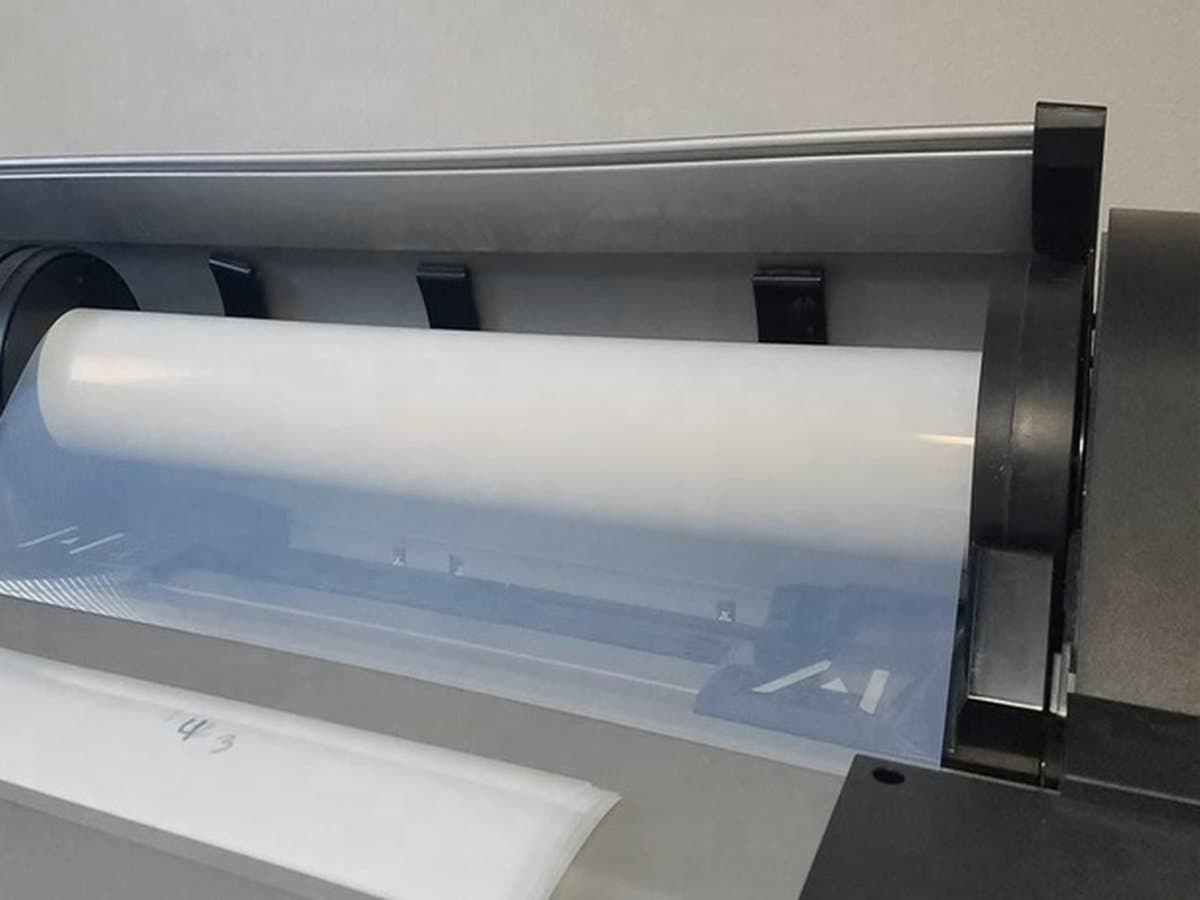
Waterproof and non-waterproof inkjet film in brief
Inkjet films differ not only in transparency or milky appearance but also in the inkjet receptive coating, the special coating on their surface that accepts the ink. The two terms most often used in the market for this coating property are waterproof inkjet film and non-waterproof inkjet film.
Inkjet films described as waterproof can be designed to resist image spreading and ink bleeding better, especially in humid working conditions. Professional film positive makers also list water and moisture resistance as an important property, because screen rooms can be humid.
Non-waterproof films, on the other hand, are not offered with the same claim of water or moisture resistance.
This does not mean "non-waterproof film is poor quality" or "cannot be used for screen printing". Both film types can be used with the right printer, ink and process conditions.
What does "waterproof" mean for inkjet film?
You cannot print directly onto the polyester surface of an inkjet film in the standard way. The film has a special coating that accepts inkjet ink. This coating's jobs are:
- Accepting the ink quickly
- Reducing spreading
- Protecting line edges
- Helping form dense black areas
- Letting the print dry in a controlled way
In products classed as waterproof, the coating can be designed to resist image spreading better on contact with moisture and water. This matters especially in screen making areas, because screen making involves linked steps such as emulsion, washout, humidity, drying and exposure.
In professional waterproof film positive products, fast drying, dimensional stability, durability and registration accuracy are also counted among the important performance properties.
Is waterproof film completely unaffected by water?
The terminology needs to be understood correctly here. Although "waterproof" is widely used in the market, the coating on an inkjet film must still be able to accept ink. Especially with water-based dye or pigment inkjet inks, the coating must quickly absorb and fix the liquid ink.
For some products, the terms water-resistant or bleed-resistant may therefore be more accurate. Professional nanoporous inkjet coatings, for example, absorb water-based pigment or dye ink quickly and reduce spreading on the surface; some manufacturers describe this as a "water-resistant" coating that reduces smearing in high humidity.
Waterproof inkjet film should not be thought of as "never affected by water under any conditions". The manufacturer's technical definition is what counts.
What is non-waterproof inkjet film?
Non-waterproof inkjet film is an inkjet-coated polyester film that the manufacturer does not class as waterproof. It also has a PET / polyester base, an inkjet coating and a printable surface.
The key difference is that the product is not offered as waterproof against high humidity or contact with water. Non-waterproof film can be used successfully when printing, drying, storage and exposure conditions are under control.
Can non-waterproof film be used for screen printing?
Yes, with the right product and process conditions. A screen printing film positive does not succeed on its waterproof property alone. The parameters that really matter are:
- Enough black density
- Sharp image
- Printing on the right side of the film
- Printer compatibility
- Ink compatibility
- Registration
- Exposure system
The quality of the film positive directly affects the following emulsion exposure. Screen printing technical sources stress that a good positive needs optically dense black areas and clean clear areas.
Key differences between waterproof and non-waterproof film
| Property | Waterproof inkjet film | Non-waterproof inkjet film |
|---|---|---|
| Inkjet coating | Yes | Yes |
| Polyester / PET base | Usually yes | Usually yes |
| Moisture / water resistance | Can be designed to be higher | No waterproof claim |
| Inkjet printing | Yes, with a suitable product | Yes, with a suitable product |
| Film positive | Yes, with a suitable product | Yes, with a suitable product |
| Screen printing use | Common | Possible depending on the product |
| Ink compatibility | Varies by product | Varies by product |
| Surface appearance | Can be transparent or different | Can be transparent or different |
Waterproof does not mean milky. Non-waterproof does not mean transparent. Technically these are different properties.
So what about Tekden's inkjet films?
Tekden Tekstil's current product labels show a clear split:
- Waterproof inkjet film: The label reads "Color: Milky", i.e. milky / frosted. Thickness 125 micron, roll length 30 metres.
- Non-waterproof inkjet film: The label reads "Color: Transparent", i.e. transparent. Thickness 125 micron, roll length 30 metres.
So in Tekden's current range there is in practice a split of milky → waterproof and transparent → non-waterproof.
It should be stressed that this is a feature of Tekden's current range; it is not a general rule for all inkjet films in the world. We explain the difference between transparent and milky film in our article The Difference Between Transparent and Milky Inkjet Film.
Where is waterproof film used?
The waterproof property helps in production areas where the film may meet moisture. The main uses are:
Screen printing stencil preparation
The film positive is prepared and placed on the screen mesh coated with emulsion. Because the screen is washed out with water after exposure, the screen room is usually a humid place to work. That is why waterproof positive films are widely preferred in screen printing.
Waterproof film in textile printing
Where screen printing screens are used in textile printing, film positives are prepared. Patterns, colour separations, registration marks and fine lines are transferred to film. Because a multi-colour design needs a separate film for each colour, the films' dimensional stability also matters.
Waterproof film in graphic screen printing
Film positives are used for the screens of jobs such as signs, labels, decals, transfers, plastics, metal and technical graphics. Here too the waterproof property helps if the working area is humid.
Film positives in electronics and precision printing
In printed electronics and similar high-precision screen printing, image accuracy and registration matter even more. Being waterproof is not enough here; film stability, image resolution, line definition, optical density and exposure performance must also be assessed.
Is waterproof film higher quality?
Not always. Waterproof is one performance property of a product; on its own it does not determine overall film quality. A film may be waterproof but:
- It may not work well with the printer used
- It may not give enough density
- It may be used with unsuitable ink
- It may be printed on the wrong side
Likewise, a good non-waterproof film can give the result you need under controlled conditions. The idea that "if waterproof costs more, it must be the better film" is wrong; choose the product according to the application.
Why does ink compatibility matter for inkjet film?
The ink used to make inkjet positives is usually either a dye or a pigment system. The film coating must accept the ink being used correctly.
Professional nanoporous coated films can be made to absorb both water-based pigment and dye inks quickly; but the same compatibility should not be assumed for every film. You will find our film ink options for Epson printers on the Inkjet Film Ink page.
Is there a difference between dye and pigment ink?
Yes. Dye and pigment inks can behave differently on the coating. In some film positive systems dye ink gives higher density, while pigment ink can also be used with other film and coating combinations. Some professional film makers offer films that accept both ink types and recommend testing the printer, coating and ink combination for density.
So no universal conclusion such as "pigment is good" or "dye is better" should be drawn.
Why does black density matter?
The main job of the black image on a screen printing positive is to block the exposure light. If the black is not dense enough, UV light can pass through and the quality of fine details on the screen suffers. The main factors affecting density are:
- Film coating
- Ink
- Printer
- Print resolution
- Media profile used
- RIP software
- Ink volume
Film makers also state that RIP software can be used to control image quality and ink volume.
Which side of inkjet film is printed?
The two sides of an inkjet film are not the same; printing must be done on the coated side. On professional film positive products the coated side can feel slightly more matte. On some roll films the coated side may face outwards, but this is not a rule for every manufacturer; follow the manufacturer's instructions.
If you print on the wrong side:
- The ink may not adhere
- The ink may spread
- The print may dry slowly
- Image density may drop
What to watch for when using waterproof film
Even with waterproof film, the working environment matters:
- Store the film in a dry place: This reduces moisture uptake by the coating.
- Print on the right side: The coated side must be used.
- Use suitable ink: Choose an ink that is compatible with the film and the printer.
- Let the print dry fully: Being waterproof does not mean the film is ready for any contact the moment it leaves the printer.
- Keep the film surface clean: Dust, grease and fingerprints can affect image and exposure quality.
What to watch for when using non-waterproof film
With non-waterproof products it is especially important to avoid:
- High humidity
- Contact with water
- Wet surfaces
- Poor storage
After printing, the film should be stored under controlled conditions; there should be no moisture or deformation on the surface before exposure.
43, 61, 91 and 110 cm inkjet film
Tekden Tekstil's inkjet film range comes in 43 cm, 61 cm, 91 cm and 110 cm widths. On the manufacturer's labels the actual sizes may appear as 0.432 m, 0.610 m, 0.914 m and 1.10 / 1.118 m.
In current products the roll length is 30 metres and the thickness 125 micron.
Should I choose waterproof or non-waterproof?
The right film depends on these questions:
- What is the application? Screen printing, textile printing, print / prepress or another photomechanical process.
- Is the working area humid? Will the film come into contact with moisture or water?
- Which printer will be used? Is the film compatible with the printer?
- Which ink will be used? Dye or pigment?
- How much image density is needed? Will the film be used for exposure?
- Which width do you need? 43, 61, 91 or 110 cm.
The answers to these questions make it easier to choose the right film.
In short
Explaining the difference as just "one lets water through, the other doesn't" is technically too simple. The real difference is how the inkjet coating performs against moisture and water.
Waterproof products help keep the printed image stable in humid production areas. Non-waterproof products can be used in various applications under controlled use and storage conditions. In both cases, coating quality, ink compatibility, black density, line sharpness and dimensional stability decide film positive performance.
Tekden Tekstil inkjet film options
Tekden Tekstil's current range has two options:
Thickness: 125 micron · Roll: 30 metres · Width: 43 / 61 / 91 / 110 cm
Choose the product according to the application and the system you use.
Frequently asked questions
What is waterproof inkjet film?
A type of inkjet film whose ink-receiving coating is developed to resist image spreading better on contact with moisture and water.
Can non-waterproof film be used for screen printing?
It can be used with suitable film, printer, ink and controlled ambient conditions. Being waterproof is not the only criterion that decides screen printing positive quality.
Is waterproof inkjet film fully waterproof?
"Waterproof" is a manufacturer's term. Real water resistance depends on the film coating, the ink and the conditions of use.
Is waterproof film always milky?
No. Waterproof and milky are two different properties. In Tekden's current range the waterproof films are milky.
Is non-waterproof film always transparent?
No, that is not a universal rule either. In Tekden's current products the non-waterproof variants are transparent.
Is waterproof film better?
It is not better in absolute terms; it gives an advantage depending on the conditions of use. Choose the film according to the application.
How many microns is inkjet film?
Tekden's current inkjet film products are 125 micron thick.
How long are inkjet film rolls?
Current Tekden products come in 30-metre rolls.
Which widths are available?
The Tekden range includes options in 43, 61, 91 and 110 cm widths.