



What Is Inkjet Film? Uses, Types and Technical Properties
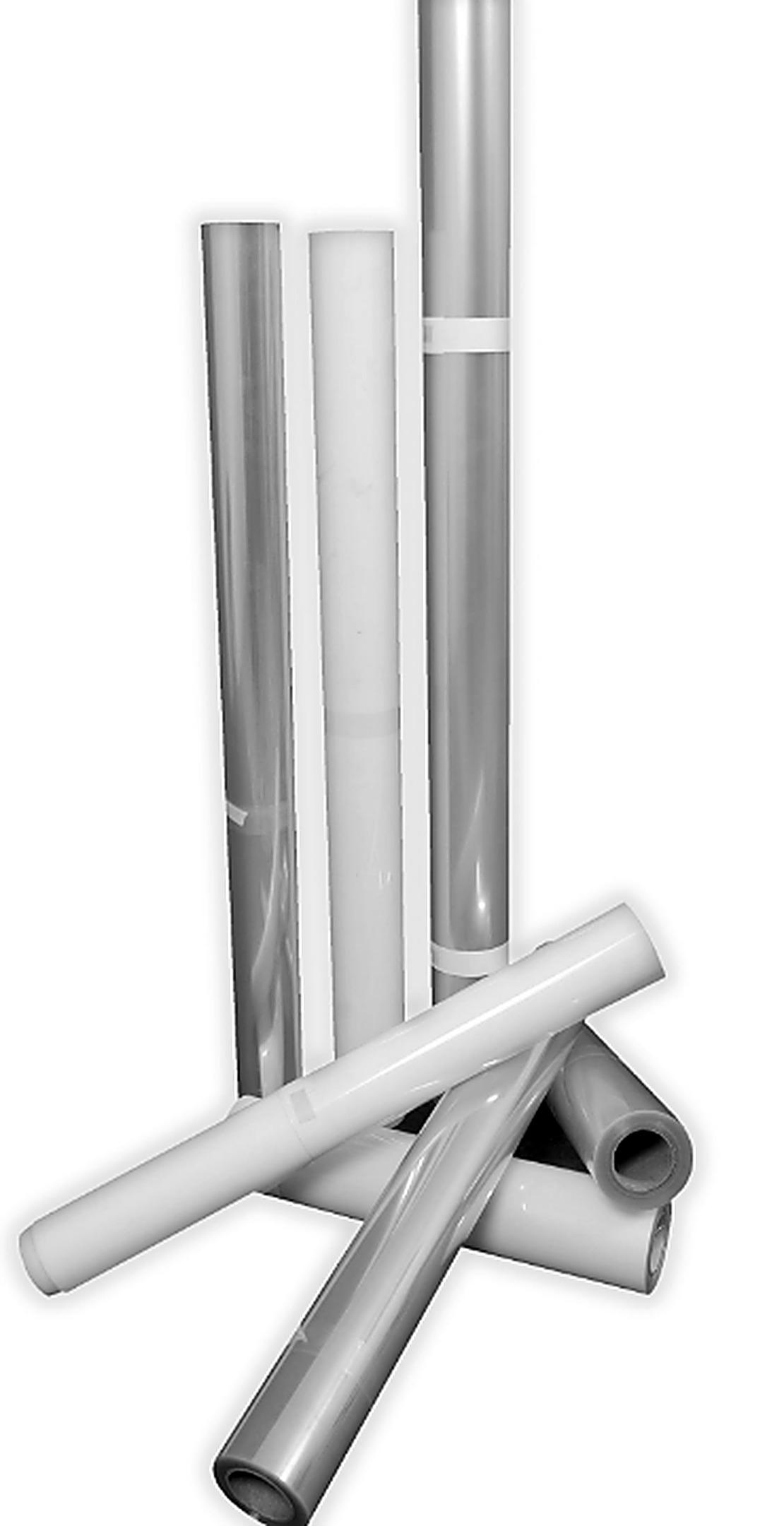
Inkjet film is a polyester-based technical film whose surface is coated to accept ink, used to print high-definition images, drawings, positives or negatives from inkjet printers.
Short answer: what is inkjet film?
Preparing film positives for screen exposure in screen printing and textile printing is one of the most common uses. Suitable inkjet polyester film types can also be used in other fields such as print and prepress, flexo and pad printing plate making, photopolymer processes, electronics/PCB applications, CAD, and architectural and engineering drawings.
Unlike standard uncoated polyester or acetate, inkjet film has a special surface that holds the ink. This coating helps reduce spreading of the ink from the printer and gives sharp lines and dense printed areas. In professional inkjet films made for screen printing, high optical density, dimensional stability and clear image transfer are especially important.
How does inkjet film work?
Inkjet film basically consists of two main parts:
- Polyester / PET base: the carrier of the film. It provides a dimensionally stable surface.
- Inkjet-receptive coating: keeps the ink on the surface in a controlled way, without running off or spreading.
So when printing on ordinary transparent polyester that is not made for inkjet, the ink may not hold properly on the surface or may spread.
In professional inkjet films, the coating can be designed for dye- or pigment-based water-based inks. In making screen printing positive film, the goal is not just a visible image; printed black areas must block enough light during exposure and clear areas must let light through.
What does inkjet film do in screen printing?
For Tekden Tekstil, one of the most important uses of inkjet film is making screen printing stencils.
In screen printing, the design to be printed is prepared on the computer. That image is then printed onto inkjet film in high-density black. The resulting film may be called a film positive, screen printing positive film, exposure film or stencil film.
The film is placed on the emulsion-coated screen mesh and the screen is exposed. Black areas on the film block the light while clear areas let it through. After exposure and washout, the design to be printed (the stencil) appears on the screen mesh.
Professional screen-positive inkjet films are developed specifically for this process to provide dimensional stability, fast drying, dense black and good registration accuracy.
Inkjet film in textile printing
The basic principle is the same in textile screen printing. A separate film can be prepared for each colour separation of the design to be printed on fabric. For example, in a design where four colours are printed with separate screens, a separate film is prepared for each colour.
That is why the film's dimensional stability and registration accuracy matter in multi-colour printing. The following can be printed on inkjet film:
- Logos and lettering
- Drawing and graphics
- Halftone
- Colour separation
- Registration marks
That is why professional inkjet positive films are widely used for colour separations and high-density positive/negative output.
Where is inkjet film used?
Inkjet film is not used only in textile screen printing. Depending on the film type and surface coating, it can be used in many printing and technical drawing processes.
1. Screen printing
This is one of the most basic uses. A film positive is made to expose an emulsion-coated screen printing stencil. Textiles, graphic printing, signage, glass, plastic, metal, labels and technical screen printing are among these fields.
2. Textile printing (emprime)
Used to transfer textile designs and colour separations to the screen. In multi-colour printing in particular, different colour separations can be output on film.
3. Graphic and industrial screen printing
Screen printing is not applied only to fabric. In suitable screen printing processes, inkjet positive film can also be used to prepare screens for graphics, transfers, decals and various industrial prints. There are also inkjet positive film systems for industries such as printed electronics.
4. Glass printing
A film positive can be used to prepare the stencil for screen printing on glass. Here the inkjet film is not printed onto the glass itself; the film's job is to help prepare the screen printing stencil. This distinction matters.
5. Electronics and PCB applications
Electronics and technical screen printing may require fine patterns to be transferred onto the screen. In such photomechanical processes, inkjet film can serve as an intermediate mask between the digital design and the physical screen.
In high-precision screen printing such as printed electronics, film and registration quality become especially important.
6. Printing and prepress
Another use of inkjet polyester films is pre-press, or prepress, work. Suitable reprographic inkjet films can be used to make exposure films for photomechanical processes such as offset, screen printing, pad printing, ceramic printing, high-volume printing and hot stamping/embossing.
Not every screen printing inkjet film is automatically suitable for every printing process. Check the optical density, film surface and exposure conditions the system needs.
7. Flexo printing
Some photopolymer plates used in flexo printing can be exposed through film. In these systems, a positive or negative separation prepared on inkjet polyester film can be used to prepare the photopolymer plate.
Technical inkjet polyester film manufacturers list contact exposure for screen printing, pad printing and flexo plates within the same film class.
8. Pad printing
If a photomechanical method is used to make the plate that carries the print in pad printing, a positive or negative can be prepared on inkjet film. So pad printing is also one of the uses of some reprographic inkjet film products.
9. Photopolymer plates and photomechanical processes
Inkjet transparent polyester films can also be used for photopolymer plates, photogravure and various photomechanical stencil-making applications. In these processes, the film's light transmission and the optical density of the printed area become important.
Inkjet film in CAD, architectural and engineering drawings
A use of the inkjet polyester film family that is completely different from screen printing is CAD and technical drawing. Special CAD polyester films used in architecture and engineering offices can carry architectural plans, engineering drawings, technical projects, black-and-white and colour CAD output and overlay work.
Polyester films made for this purpose may emphasise line sharpness, dimensional stability, tear resistance, fast drying and a suitable surface.
An inkjet polyester film made for CAD does not have to be the same as a screen printing film positive. Both may be polyester with an inkjet coating, but the coating type, transparency, surface and purpose can differ. So the technical suitability of Tekden Inkjet Film should be assessed separately before using it for CAD.
What is the difference between inkjet film and ordinary transparent film?
The biggest difference is the inkjet receptive coating, the surface coating that accepts inkjet ink. Standard polyester or acetate film may not properly accept the water-based ink from an inkjet printer.
The coating applied to inkjet film helps with the following:
- Holding the ink
- Sharper edges
- High print density
- Controlled drying
So when preparing screen printing positives, use a product designed for inkjet printing instead of ordinary transparent film.
Which side of inkjet film do you print on?
Inkjet films mostly have a coated side for printing, and this side accepts the ink. Some professional film manufacturers note that the coated side can feel slightly matte and that on rolls the coated side may be on the outside. But this should not be taken as universal for every manufacturer.
For Tekden products, use the print side according to the manufacturer's product information.
What are transparent and milky inkjet films?
Two terms often used in the inkjet film trade in Türkiye are şeffaf (transparent) inkjet film and buzlu (milky) inkjet film. In English product terminology you may see terms such as Transparent / Clear and Milky / Matte / Translucent.
According to the actual product labels, Tekden Tekstil's current range includes these variants:
- Transparent: Non-Waterproof
- Milky / frosted: Waterproof
This pairing applies to Tekden's current products. Do not generalise to all inkjet films in the world that “waterproof is always milky and non-waterproof is always transparent”.
What is waterproof inkjet film?
The term “waterproof” inkjet film is widely used, especially in the screen-positive market. In these products the coating can be designed to be more resistant to humidity and ink spreading (bleeding) than standard inkjet coatings. Some manufacturers describe their products directly as waterproof film positives.
Technically, though, the term “waterproof” should be treated with care. Because inkjet film coatings have to absorb water-based ink, some technical sources note that certain microporous coatings should be considered more water-resistant rather than fully waterproof. So the most accurate approach is to use the waterproof definition given by the manufacturer.
What is non-waterproof inkjet film?
Non-waterproof film is an inkjet film type that the manufacturer does not classify as waterproof. In Tekden's current range, the non-waterproof options are Transparent.
These films can also be used in screen printing or suitable technical applications, but the product's technical recommendations on humidity, printing conditions and ink system should be followed.
Tekden Tekstil inkjet film sizes
In the Tekden Tekstil range, inkjet films come in four main widths:
- 43 cm inkjet film: label size 0.432 m
- 61 cm inkjet film: label size 0.610 m
- 91 cm inkjet film: label size 0.914 m
- 110 cm inkjet film: labels read 1.10 m / 1.118 m
In the Turkish market these products are also simply called 43, 61, 91 and 110 film.
This size system also largely matches the 17", 24", 36" and 42–44" roll classes in the international screen-positive film market.
Tekden inkjet film technical specifications
Basic information verified from the current product labels:
- Material type: Inkjet polyester film
- Thickness: 125 micron
- Roll length: 30 metres
- Widths: 43 / 61 / 91 / 110 cm
- Variants: transparent and milky
- Transparent: Non-Waterproof
- Milky: Waterproof
When choosing a product, look not only at the width but also at the printing and exposure system it will be used with.
What should you look for when choosing inkjet film?
Purpose
The first question: What will the film be used for? A screen printing positive and a CAD drawing film do not have the same technical needs.
Film surface
Transparent, milky, matte or other surface types can vary with the purpose of the application.
Ink compatibility
The printer and ink system used with the film must be compatible. In professional screen-positive films, dye and pigment ink compatibility can vary by product model.
Black density
In screen printing and photomechanical exposure, it is important that the black area is dense enough. Density is not determined by the film alone; the following can affect the result:
- Film
- Printer
- Ink
- RIP / software
- Resolution
- Print settings
- Amount of ink applied
Dimensional stability
The dimensional stability of polyester film matters especially for multi-colour printing, precise registration, technical drawing and large-format work.
Are inkjet film and DTF film the same thing?
No. DTF film is a specially coated transfer film for the Direct to Film textile transfer system. Screen printing inkjet film is mainly used to produce film positives, negatives, technical drawings or reprographic output.
Both products may be PET/polyester based, but their coating, purpose, printing process and ink system differ. So they should not be used in place of each other.
Are inkjet film and acetate the same thing?
Although transparent printing films are sometimes called “acetate” in everyday speech, most professional inkjet positive films are polyester/PET based. So it is not technically correct to call every inkjet film acetate.
The correct product description for Tekden Tekstil products: Inkjet Polyester Film.
Who uses inkjet film?
Businesses that need inkjet film can include:
- Screen printing workshops and textile printers
- Textile printing businesses
- Graphic screen printers and glass printing businesses
- Electronics / PCB manufacturers
- Print and prepress companies
- Businesses that make flexo plates and do pad printing
- Photopolymer plate makers and reprographic companies
- CAD print centres, architecture and engineering offices
However, the type of film to use can differ from one industry to another.
Conclusion
Inkjet film is not just “a transparent printer film”. With the right product, it creates a precise transfer medium between the digital design on the computer and a screen printing stencil, photopolymer plate or technical drawing.
Especially in screen printing and textile printing, the quality of the film positive used for screen exposure can directly affect the stencil-making process. When choosing inkjet film, consider the application, film type, transparent / milky surface, waterproof / non-waterproof structure, printer and ink system, film width and print density together.
Tekden Tekstil offers 125 micron, 30 metre inkjet films in 43, 61, 91 and 110 cm widths. If you are not sure which film you need, send us your application and film width.
Frequently asked questions
Is inkjet film used in screen printing?
Yes. Making film positives for exposing screen printing stencils is one of the main uses of inkjet film.
Is inkjet film used in textile printing?
Yes. It can be used to prepare designs and colour separations as film positives in textile screen printing.
Are transparent and milky inkjet film the same?
No. Their surface appearance and product properties differ. In the Tekden range, the transparent options are Non-Waterproof and the milky options are Waterproof.
How many microns is inkjet film?
Tekden Tekstil's current products are 125 microns thick.
How many metres is an inkjet film roll?
Tekden's current rolls are 30 metres long.
What sizes does inkjet film come in?
Common sizes in the Tekden range are 43 cm, 61 cm, 91 cm and 110 cm.
Can inkjet film be used for CAD?
There are special inkjet polyester films for CAD and architectural use. But not every screen printing positive film is automatically a CAD film. Check the technical suitability of the product you will use.
Which side of inkjet film is printed?
Printing is usually done on the specially coated side that accepts inkjet ink. Follow the manufacturer's product instructions.
Is inkjet film the same as DTF film?
No. The two films are made with different coatings for different printing processes.