











What Is Screen Printing? How Is It Done and Which Materials Are Used?
Screen printing is a printing method in which ink is transferred onto the substrate with a squeegee through the open image areas of a fine mesh stretched on a frame. In this guide we explain how screen printing works, its steps from screen making to curing, and the materials used.
What is screen printing?
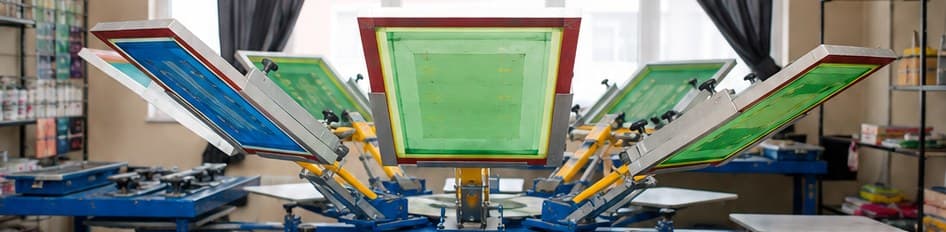
Screen printing is a printing method in which ink is transferred onto the surface to be printed with a squeegee, through the open image areas of a fine mesh stretched on a frame.
In Türkiye this method is known by different names such as serigrafi baskı, elek baskı, şablon baskı and ipek baskı. Its international name is screen printing.
Turkish vocational training materials describe screen printing as a stencil printing system in which areas that do and do not let ink through are formed on a mesh. Academic sources state that it is used in very different industries such as textiles, packaging, ceramics, electronics and advertising.
One of the key features of screen printing is that it is not limited to paper or fabric. With the right products it is used across a very wide range of production, from textiles to glass and from ceramics to electronic components:
- Mesh (screen mesh)
- Emulsion
- Ink
- Squeegee
- Printing press
- Drying / curing system
Mesh maker NBC Meshtec describes modern screen printing as an industrial technology that reaches from textiles and glass to PCB, electronic component and solar cell production.
Are serigrafi, elek baskı and screen printing the same thing?
In terms of the basic printing principle, yes. In Türkiye customers and producers may use names such as serigrafi, elek baskı (mesh printing), ipek baskı (silk printing) and şablon baskı (stencil printing).
The terms "silk printing" and "screen printing silk" have historical and trade reasons. In modern professional printing screens, synthetic technical meshes are mostly used instead of real silk. One of them is polyester monofilament screen mesh.
In addition, stainless steel and other high-performance mesh materials can be used in special industrial applications. NBC Meshtec states that screen printing meshes can be made from synthetic fibres such as polyester and nylon or from metal wires such as stainless steel.
Is screen printing the same as emprime?
Not exactly. Screen printing is a printing method. Emprime, on the other hand, is a broader trade term for printing and colouring fabric, especially in the textile industry.
For example, printing a T-shirt or fabric by screen printing belongs to the world of textile printing. But when the same screen printing technology is used on glass, metal, electronic circuits or ceramics, it is no longer called textile printing. We cover this topic in our article What Is Emprime (Textile) Printing?.
Screen printing can be used in textile printing, but not every screen print is textile printing.
How does screen printing work?
At the heart of screen printing is a controlled stencil. Some areas of the mesh stretched on the frame are closed with light-sensitive emulsion; the areas of the design to be printed stay open.
When the squeegee moves across the screen, the ink passes only through the open areas of the stencil and the design is transferred to the substrate below. NBC Meshtec defines screen printing as forming an image by pushing ink through the openings between the mesh threads with a squeegee.
The principle looks simple, but professional print quality depends on many variables. Mesh count, thread diameter, mesh opening, tension, stencil thickness, film positive quality, emulsion, exposure, squeegee, ink and substrate all work together. Screen Printing Magazine's technical reviews also treat film, mesh, emulsion, ink, substrate and press settings as variables that affect screen making and print quality.
Which materials are used in screen printing?
The basic components of a professional screen printing process are:
| Material / equipment | Function |
|---|---|
| Screen printing frame | Keeps the mesh taut and stable |
| Screen mesh | Lets the ink pass in a controlled way |
| Emulsion | Forms the light-sensitive stencil on the mesh |
| Emulsion coater (scoop coater) | Applies the emulsion evenly to the mesh |
| Inkjet film / film positive | Transfers the design to the emulsion during exposure |
| Exposure unit | Hardens the emulsion with UV light |
| Washout system | Opens the image areas in the stencil |
| Squeegee | Transfers the ink through the mesh onto the substrate |
| Screen printing ink | Forms the printed image |
| Printing table / press | Holds the screen and the substrate in the right position |
| Pallet adhesive / spray | Reduces fabric slipping during printing, especially on textiles |
| Frame adhesive | Used to fix the mesh to the frame |
| Blockout / screen filler | Closes unwanted open areas in the stencil |
| Screen cleaning chemicals | Helps remove ink, emulsion and ghost / haze residues |
| Drying / curing system | Dries or cures the print according to the ink used |
SAATI's technical screen printing range also treats the process as a sequence of categories: mesh, frame, mesh preparation, emulsion, coating equipment, exposure, inkjet film, washout, hardener, blockout, squeegee and cleaning chemicals.
How is screen printing done?
Thinking of professional screen printing as just "putting ink on the screen and pulling the squeegee" is not right. Before printing itself there is a detailed screen-making process. We describe the steps in order below.
1. The design is prepared
The first stage is preparing the logo, text, pattern, graphic, photo, technical drawing or other image to be printed in digital form. In multi-colour work the design is split into colour separations and a separate stencil (screen) may be needed for each colour.
2. The film positive is prepared
In digital screen making, the design is printed in dense black on a transparent film. This film is called a film positive, screen printing film, positive film or exposure film. The MEB screen printing training materials also describe making a positive as preparing the image on a light-transmitting surface so that it forms areas that do and do not receive light.
Today special coated inkjet polyester films are used for this. The black on the film must be dense enough, because it has to stop UV light during exposure. Film positive quality therefore directly affects stencil quality. We explain the film types in our article What Is Waterproof and Non-Waterproof Inkjet Film?.
3. Frame and mesh are chosen
Screen printing frames can be aluminium, metal and in some applications wood; aluminium frames are common in modern professional production. Technical mesh is stretched over the frame.
NBC Meshtec describes one of the first steps of screen making as choosing the frame by job size and the mesh material and mesh count by application.
Why does screen printing mesh matter so much?
Mesh is one of the key control elements of a screen printing system. Customers look for it under names such as screen mesh, silk mesh, printing silk, screen printing silk or polyester mesh. You can find the products Tekden Tekstil supplies for screen printing on our screen printing silk page.
But mesh is more than a single number like "43T" or "77T". Professional technical mesh tables list many parameters together, such as mesh count, thread diameter, mesh opening, open area, mesh thickness, theoretical ink volume and recommended tension. SAATI's technical mesh tables also define mesh with these parameters.
You cannot determine exact ink transfer or an exact micron value from the mesh count alone; thread diameter and weave structure also matter.
What is the general difference between low and high mesh counts?
As a general principle, a coarser (lower-count) mesh lets more ink through, while a higher-count mesh is used to control fine detail. But this is a simplified principle.
The real choice should be based on the ink's particle structure, the required film thickness, print detail, substrate, thread diameter and mesh geometry. Fixed tables such as "count X is always used for this job" should not be used without manufacturer data and real print conditions. For details, see our guide What is mesh count?.
4. The mesh is stretched on the frame
Mesh is not simply laid on the frame; it is stretched under controlled tension. During stretching the mesh is held at an even, repeatable tension and fixed to the frame with frame adhesive. Low or uneven tension can affect print quality and registration accuracy.
In its mesh quality control, SAATI counts mesh count, mesh angle and above all tension control among the key parts of screen quality. NBC Meshtec also describes stretching as holding the mesh under controlled tension and then fixing it to the frame with adhesive.
5. The mesh is cleaned and degreased
The mesh must be clean before the emulsion is applied. Grease, dust, dirt or production residues on the mesh make it hard for the emulsion to adhere properly.
SAATI's emulsion instructions recommend cleaning the mesh with a suitable degreaser before coating. Chromaline also lists poor degreasing as one of the causes of pinholes and coating faults.
6. The emulsion is coated on the mesh
Screen printing emulsion is the light-sensitive stencil material. The emulsion is applied to the mesh in a controlled way with an emulsion coater (scoop coater).
The aim of coating is to fill the mesh openings evenly and form a smooth stencil surface on the print side. Ulano states that the coating technique must fill the mesh openings properly and that the final coat strongly affects the stencil structure.
What types of screen printing emulsion are there?
Professional screen printing emulsions use different photochemical systems. The common main classes are diazo, dual-cure and pure photopolymer (SBQ) emulsions; some makers also offer hybrid photopolymer and special CTS systems. SAATI and Chromaline sources also classify diazo, dual-cure and pure photopolymer systems as separate emulsion technologies.
Which emulsion to use depends on the ink system, the required resolution, the exposure equipment, the print run and the water or solvent resistance needed. Choosing only the "fastest" or "hardest" emulsion is not the right approach. For details, see our guide How to choose a screen printing emulsion?.
7. The coated screen is dried
After coating, the stencil must be fully dried before exposure. This should be done in a clean, controlled and as dust-free a room as possible.
Chromaline states that drying the screen horizontally with the print side down helps form a smooth stencil on the print side. SAATI also recommends drying the coated screen thoroughly in a dark or safelight-lit, dry room. A damp or not fully dried stencil can affect exposure badly.
8. The film positive is placed on the screen
The prepared inkjet film is positioned on the emulsion-coated screen. The better the contact between film and stencil, the more accurately the image edges are transferred. In professional systems the film and screen are usually held in controlled contact or under vacuum in the exposure unit.
SAATI's emulsion instructions recommend placing the emulsion side of the positive in contact with the print side of the screen and exposing it in a suitable vacuum frame.
9. The screen is exposed to UV light
During exposure, UV light hardens the areas of the emulsion that receive light. The dense black areas on the film positive block the light, so the design areas can later be washed out with water.
Ulano explains this as UV energy reacting with the emulsion's sensitiser to harden the stencil, while the areas blocked by the positive dissolve during washout.
Why isn't exposure time the same for every screen?
You will find fixed times online such as "expose for X minutes", but no single time can be valid for every system. Exposure time is affected by the light source, the lamp's power and age, the emulsion, the mesh, the mesh colour, stencil thickness, the distance between lamp and screen, film density and ambient conditions.
Chromaline states clearly that the correct exposure time varies with equipment, emulsion, mesh and coating technique, and that testing is required. SAATI and Ulano also recommend exposure calculators and step exposure tests for this reason.
What problems can under-exposure cause?
With under-exposure the stencil does not harden enough. As a result the stencil may weaken during washout, the emulsion may break down early during printing and details may suffer. Ulano gives low exposure as one of the main reasons why emulsion does not hold well in the mesh.
Over-exposure, on the other hand, can shrink fine details and small openings. So the aim is not the longest or shortest exposure but the right exposure.
10. The screen is washed out and the image opened
After exposure the stencil is washed out with water. The emulsion opens in the image areas where the film blocked the light; the other areas stay on the mesh as hardened stencil. As a result the print areas let ink through and the closed areas block it.
Turkish vocational sources also describe the screen printing stencil as a structure in which non-image areas are closed with emulsion and image areas are left open to let ink through.
11. The screen is checked
Once the screen is fully dry, the stencil is checked. Small pinholes or unwanted openings caused by dust or coating faults are covered if needed with a blockout / screen filler. Ulano's descriptions of its screen fillers also state that they can be used to block stencil edges and for touch-up.
For long print runs, a stencil hardener can be used according to the manufacturer's instructions if the emulsion allows it.
12. The screen is mounted on the printing press
The finished screen is mounted on a printing table or an automatic press. Here mechanical settings are made, such as registration, screen height, the gap between screen and substrate (off-contact), squeegee position and print stroke.
In multi-colour work especially, the screens must register precisely with one another. In industrial production, screen tension and the dimensional stability of film and stencil become even more critical for this reason.
13. The right ink is chosen
There is no single "screen printing paint". Ink is chosen by the surface to be printed, the conditions the print will face, the drying / curing system and the mechanical and chemical durability expected. Nazdar uses an approach that considers substrate, application, finishing and end use together when choosing screen printing ink.
Fabric, glass, plastic, metal and paper, for example, are not the same surface; automatically using the same ink system on all of them is not right.
Types of screen printing ink
Depending on the industry and application there are water-based, plastisol, solvent-based, UV-curing and various special functional ink systems. Their drying and curing mechanisms are not the same.
Solvent-based inks, for example, dry as the solvent evaporates, while UV systems cure with suitable UV energy. That is why the values in the manufacturer's technical data sheet (TDS) for each product must be followed.
14. Printing with the squeegee
The squeegee is one of the most critical mechanical parts of a screen printing system. In Türkiye it is called ragle, rakle, ragle lastiği or rakle lastiği, and in English a squeegee. The squeegee pushes the ink through the stencil onto the substrate.
NBC Meshtec states that squeegee shape, rubber hardness, angle, pressure and print speed affect the amount of ink transferred and the print result. For options, see our squeegee rubber page.
Why does squeegee Shore hardness matter?
Squeegee rubbers come in different hardnesses, usually expressed in the trade as Shore A (durometer). Softer and harder squeegees do not behave the same way. A squeegee can also be single-layer, multi-layer and of different profile shapes.
The right squeegee should therefore be chosen according to ink transfer, print detail, print speed, substrate and press conditions. FIMOR stresses that squeegees wear chemically and mechanically in use, and that a clean print edge needs care, resting and, when necessary, sharpening or replacement. Details: What is squeegee Shore hardness?
Squeegee colour is not a universal Shore standard; different makers may use different colour codes. Read the hardness from the manufacturer's technical table.
15. Flood and print stroke
In professional screen printing, printing is usually thought of as two movements. The first (flood) fills the stencil openings with ink. Then, during the print stroke, the squeegee presses the screen towards the substrate and pushes the ink through the open stencil areas.
Screen Printing Magazine defines the squeegee's basic job as bringing the stencil into controlled contact with the substrate and releasing the ink from the mesh.
16. The print is dried or cured
The job may not be finished once the ink is on the substrate. Depending on the ink system, air drying, heat, an oven, flash curing, UV or other curing methods may be needed. Some industrial prints such as glass are also fired after printing; the MEB glass screen printing source describes quality control after printing and firing for suitable glass inks.
Every ink has its own curing values. Temperature, time or UV energy should not be generalised; follow the technical data sheet of the ink you use.
17. Print quality is checked
In professional printing it is not enough for the image to reach the surface. Edge sharpness, colour consistency, registration, ink thickness, adhesion, blurring, pinholes, bleeding and other performance criteria for the application are checked.
The MEB (Turkish Ministry of Education) technical source on glass printing also stresses criteria such as sharp lines, ink adhesion, no colour mixing and balanced ink thickness.
18. The screen is cleaned and reused if needed
After printing, the screen can be reused. First the remaining ink is cleaned off. If the design is no longer needed, the emulsion is stripped and the mesh prepared again; this is called screen reclaiming.
Professional screen rooms separate different chemical jobs such as ink remover, emulsion remover, ghost / stain remover and degreaser. SAATI and Chromaline also divide their screen cleaning systems into these stages. When using chemicals, follow the manufacturer's safety data sheet (SDS) and technical data sheet (TDS).
Which materials can be screen printed?
One of the great strengths of screen printing is that it can be adapted to different substrates. With the right ink and process, screen printing is used on:
- Textiles and fabric
- Glass
- Ceramics
- Plastic
- Metal
- Paper and board
- Labels and graphic surfaces
- Electronic components
Turkish academic sources mention screen printing in packaging, ceramics, textiles, electronics and advertising; international mesh makers also list textiles, glass, ceramics, PCB, electronics and solar panels among its uses.
Screen printing in textile printing
Textile screen printing is the best-known use of the method, on T-shirts, fabric, textile panels and similar surfaces. Mesh, an emulsion suited to textiles, ink, squeegee, pallet adhesive or spray adhesive and the drying / curing system must be considered together.
In SAATI's textile screen printing products, emulsions are classified directly by flat textile and garment printing use. You will find our mesh options for textiles on the textile printing screen mesh page.
Screen printing on glass
Screen printing is used in the glass industry for both decorative and technical purposes. NBC Meshtec gives architectural and automotive glass as examples of polyester monofilament screen mesh applications.
The mesh, emulsion, ink, squeegee and drying / firing process used in glass screen printing need not be the same as in textiles; choosing products by industry is therefore important. See glass printing screen mesh.
Screen printing on ceramics
Screen printing has long been one of the printing methods used on ceramic surfaces. Turkish vocational training materials cover various screen printing methods for ceramics, such as direct printing and decals.
Screen printing in electronics and PCB production
Modern screen printing is not only a graphic or textile method. Precision stencil and mesh systems are used in fields such as printed circuit boards (PCB), membrane switches, electronic components, solar cells and functional printing. Special industrial screen printing meshes are developed for these applications.
In these fields mesh tension, dimensional stability, fine-line resolution and ink transfer become much more critical. See electronics printing screen mesh.
What are the advantages of screen printing?
Screen printing is still used in so many industries not because of a single advantage. Its most important feature is process flexibility: with different combinations of mesh, stencil, ink and squeegee, both decorative and functional prints can be made.
Some screen printing processes also give a more controlled and thicker ink layer than other printing methods. That is why screen printing is not only a visual printing method but, in some industries, a functional part of production.
The most common mistakes in screen printing
In professional screen printing most problems do not come from a single material. Pinholes, for example, can be caused by dirty mesh, dust, air bubbles, too little emulsion or wrong exposure. Chromaline's troubleshooting sources also list many possible causes of pinholes, such as poor degreasing, dust, bubbles in the emulsion, thin coating and under-exposure.
So when a print goes wrong, instead of saying only "the ink is bad" or "the mesh is wrong", the whole system should be checked.
Are mesh and micron the same in screen printing?
No. Mesh count gives the thread density over a given length. Micron / mesh opening relates to the real size of the gap between threads. The real opening is also affected by thread diameter and weave geometry.
That is why SAATI's technical mesh tables give the same mesh count together with separate parameters such as thread diameter, mesh opening, open area and theoretical ink volume. A conversion such as "100T = exactly X microns" should not be made without the product's technical data. Details: The relationship between mesh and micron.
How do you choose the right materials for screen printing?
There is no single "best" product for the screen printing process. Start with one question: What are we printing and what do we expect from the print? Then consider together:
- Substrate to be printed
- Level of detail required
- Ink system
- Ink thickness required
- Print run
- Drying / curing process
- Chemical and mechanical resistance needed
That is also why Nazdar's ink selection approach considers substrate, application, finishing and end use together.
Conclusion: screen printing looks simple but is a technical printing system
The basic principle of screen printing is easy to understand: ink is pushed through the stencil openings in the mesh to transfer the image to the surface. But behind this simple principle lie many technical parameters for a professional, repeatable result.
A good screen print comes from the right screen mesh, the right mesh tension, a clean surface, a suitable emulsion, a sharp film positive, correct exposure, a suitable squeegee, suitable ink and correct printing and curing conditions working together. That is why screen printing is not just a printing technique but a linked production system from mesh to ink.
Frequently asked questions
What is screen printing?
Screen printing is a printing method in which ink is transferred onto the substrate with a squeegee through the open stencil areas of a mesh stretched on a frame.
Is screen printing the same as "elek baskı" (mesh printing)?
In Türkiye the two terms are mostly used for the same printing method.
What is screen printing silk?
The mesh used in a screen printing screen is called "screen printing silk", "printing silk" or "screen mesh" in the trade. Most meshes used today are not real silk but synthetic technical materials such as polyester.
What is screen printing emulsion?
It is the coating material used to form a light-sensitive stencil on the mesh. After exposure it forms the open and closed areas of the print.
What is a squeegee?
A squeegee is the printing tool that transfers ink through the mesh and stencil onto the substrate.
What does inkjet film do in screen printing?
It lets the digitally prepared design be printed as a film positive and transferred to the stencil during exposure.
Can screen printing be done on fabric?
Yes. Textile and garment printing are among the most important uses of screen printing.
Can screen printing be done on glass?
Yes. With suitable mesh, stencil, glass ink and production process, screen printing can be done on glass.
Can screen printing be done on plastic and metal?
With the right substrate and ink combination, screen printing can be used in many plastic and metal applications.
What happens as the mesh count rises?
In general the weave becomes denser; but real print behaviour depends not only on the mesh count but also on thread diameter, opening, open area, stencil and ink.
Are mesh and micron the same thing?
No. Mesh count expresses thread density, while microns express the real physical opening or size. Mesh count alone does not determine the exact mesh opening.
How many minutes should exposure take?
There is no single standard time. Run an exposure test for the emulsion, light source, mesh, coating thickness and equipment.