













Are Silk Mesh and Screen Mesh the Same? What Is the Difference?
The terms silk mesh and screen mesh are often used interchangeably, especially in screen printing, textile printing, filtration and technical mesh. That is why one of the questions buyers ask most is "Are silk mesh and screen mesh the same thing?".
Short answer
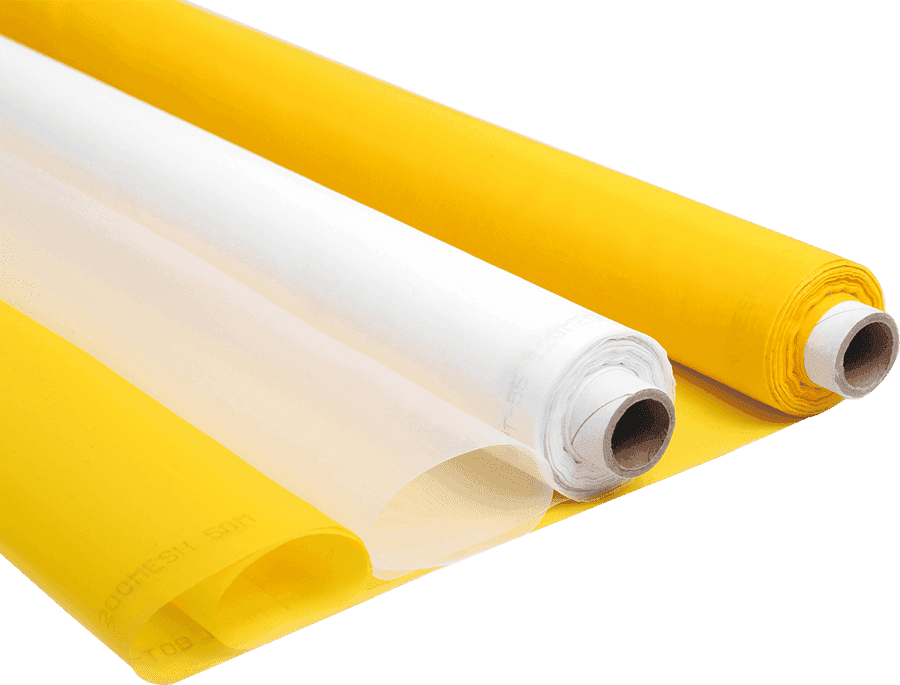
In the screen printing and technical mesh trade in Türkiye, "silk mesh" (ipek bezi) and "screen mesh" (elek bezi) usually describe the same product family. However, today's technical screen mesh should not be assumed to be made of real silk. The screen mesh supplied by Tekden Tekstil is polyester monofilament.
Depending on the application, the same technical weave can also go by different names. In printing it is called screen printing silk, printing silk or stencil silk, while in filtration terms such as filter cloth, filter silk or filter mesh may be used.
What Is Silk Mesh?
The term "silk mesh" goes back to the early days of screen printing.
In the early days of screen printing, real silk fabrics were used in printing screens. That is where the English term "silk screen printing" comes from.
Over time, natural silk was replaced by synthetic mesh materials with more controlled technical properties. Today polyester, nylon and, in some special applications, metal mesh can be used in professional screen printing.
Out of old habit, many users in Türkiye still search for technical mesh products under these names:
- Silk mesh
- Screen printing silk
- Printing silk
- Stencil silk
So today, "silk mesh" should not always be understood as a fabric made of real silk fibre.
The product group supplied by Tekden Tekstil is polyester monofilament screen mesh / silk mesh.
What Is Screen Mesh?
Screen mesh is a technical mesh material with a defined thread structure and a regular weave geometry.
Depending on the weave structure, thread count, thread diameter and purpose, the product can be used in different industries.
In polyester monofilament screen mesh, every thread in the weave consists of a single filament. That is what "monofilament" means.
This structure forms the basis of technical mesh products that can be used in particular in:
- Screen printing
- Textile printing
- Glass printing
- Electronics and PCB printing
- Filtration
- Sieving
- Straining
- HVAC and air-conditioning applications
- Automotive
- Various industrial applications
To browse Tekden Tekstil's polyester monofilament screen mesh range, see the Screen Mesh / Silk Mesh page.
What Is the Difference Between Silk Mesh and Screen Mesh?
In everyday trade language there is usually no clear product difference between the two terms.
The real difference lies mostly in naming habits.
| Term | Common usage in the trade |
|---|---|
| Silk Mesh | One of the traditional names used in screen printing and printing |
| Screen Mesh | A more general term describing the product's technical mesh and sieving structure |
| Screen Printing Silk | Mesh used in screen printing stencils |
| Printing Silk | Technical mesh used in printing applications |
| Stencil Mesh | A trade term for the mesh stretched on a screen printing frame |
| Filter Cloth | The name used in filtration and straining applications |
| Filter Silk | An alternative term used in filtration |
| Filter Mesh | An alternative name used in filter and sieving applications |
| Polyester Mesh | One of the product's international technical names |
| Monofilament Mesh | A technical term for a single-filament thread structure |
So one customer may ask for "silk mesh" while another asks for the same product family as "screen mesh".
When choosing a product, look at the technical need of the application, not only at the name used.
Is Silk Mesh Made of Real Silk Today?
Not always. This is one of the most common misunderstandings about silk mesh.
Although real silk was used in the history of screen printing, synthetic and metal materials are widely used in modern screen printing mesh.
Polyester monofilament mesh is one of the important technical mesh types used in screen printing today.
The screen mesh / silk mesh supplied by Tekden Tekstil is polyester monofilament.
So here "silk mesh" does not mean the product is made of real silk; it is one of the traditional product names used in the trade.
What Is Polyester Monofilament Screen Mesh?
Polyester monofilament screen mesh is a type of technical mesh woven from single-filament polyester threads. Two concepts matter here:
Polyester: the type of material used in the weave.
Monofilament: each thread consists of a single filament.
Polyester monofilament mesh can be used in applications from screen printing to filtration. However, the same mesh number should not be assumed to suit every application automatically.
The following factors should be assessed together when choosing the right product:
- Mesh number
- Thread diameter
- Actual mesh opening
- Open area
- Form of use
- Ink or fluid used
- Particle to be retained
- Process conditions
What Do Screen Mesh Numbers Mean?
Screen mesh is specified with values such as 12T, 43T, 77T, 120T.
The T/cm value gives the number of threads per centimetre. Different T values stand for different weave densities.
Thread diameter and weave structure also affect the actual opening. So, especially in filtration, the technical details of the process should be assessed instead of choosing a product only by asking "how many T?".
For more on mesh numbers, see the technical guide Mesh Number: T/cm and Mesh/Inch.
The mesh number alone does not give an exact micron value or mesh opening.
Where Is Silk Mesh Used?
What "silk mesh" means can vary with the industry it is used in.
Screen printing and other printing
In screen printing, the mesh is stretched on a frame. The stencil created by coating with emulsion and exposure lets the ink pass to the printing surface only in the intended areas.
In this use, the product may be searched for under these names:
- Screen printing silk
- Printing silk
- Stencil silk
- Gauze
- Screen mesh
For the product structure specific to screen printing, visit the Polyester Screen Mesh / Silk Mesh for Screen Printing page.
Filtration and sieving
In filtration, the same technical mesh family appears under other names. For example:
- Filter cloth
- Filter silk
- Filter mesh
- Straining cloth
- Straining mesh
- Polyester filter mesh
In filtration, the right mesh is chosen according to factors such as the medium being filtered, the particle to be retained and the process conditions.
For filtration applications, see the Polyester Monofilament Filter Mesh & Filter Cloth page.
What Is Silk Screen Mesh?
"Silk screen mesh" is another compound term people use for the same product group. Online in particular, people search for:
- Silk screen mesh
- Polyester silk screen mesh
- Silk mesh for screen printing
- Polyester screen mesh
- Monofilament screen mesh
Many of these terms point to similar technical mesh product families. At the purchasing stage, however, the decision should not be based on the product name alone.
The mesh structure needed must suit the application.
What to Look For When Choosing Screen Mesh
The right screen mesh depends on the application.
In printing applications
These details matter:
- Type of print to be made
- Design detail
- Ink or printing paste used
- Substrate to be printed
- Screen size and process conditions
In filtration applications
These details matter more:
- The medium to be filtered
- Particle to be retained
- The mesh or sample currently used
- Operating temperature
- Substances in contact
- How the filter element is used
If you have a sample of the screen mesh you currently use, it can be an important reference for technical matching.
Tekden Tekstil Screen Mesh / Silk Mesh
Tekden Tekstil has worked with screen printing and textile printing consumables and technical mesh products since 2003.
The polyester monofilament screen mesh / silk mesh range consists of 12T, 27T, 32T, 43T, 55T, 62T, 77T, 90T, 100T, 120T, 140T and 165T.
Products can be supplied in different widths and sizes depending on the need.
Tekden Tekstil can give you technical product selection support and a quote on which mesh number to consider for your printing, filtration, sieving or industrial application.
Frequently Asked Questions
Are silk mesh and screen mesh the same?
In the screen printing and technical mesh trade in Türkiye, the two terms are usually used for the same product family. However, "silk mesh" does not mean the product is necessarily made of real silk. The screen mesh supplied by Tekden Tekstil is polyester monofilament.
Is silk mesh really made of silk?
Historically, real silk was used in screen printing stencils. Today, technical mesh materials such as polyester, nylon and metal may be used.
Are polyester screen mesh and silk mesh the same?
In the trade, "silk mesh" is widely used for polyester monofilament screen mesh. When quoting, stating separately that the material is polyester monofilament is technically more accurate.
What is screen printing silk?
In the trade, the technical mesh stretched on the frame of a screen may be called screen printing silk. The screen mesh Tekden Tekstil offers for screen printing is polyester monofilament.
Are filter silk and silk mesh the same product?
These may be trade names of the same technical mesh family in different applications. When choosing a product for filtration, however, the opening structure and process conditions must be assessed separately.
Are mesh number and micron the same?
No. Mesh number and micron are different technical concepts. T/cm gives the thread count, while the actual opening also depends on thread diameter and weave structure.
Conclusion: Look at the Technical Structure, Not the Name
Silk mesh, screen mesh, printing silk, screen printing silk, filter silk or filter cloth… As the industry changes, the same technical mesh family can go by different names.
So rather than looking only at the trade name, the material structure, mesh number and the real application need should be assessed when choosing a product.
You can browse Tekden Tekstil's polyester monofilament screen mesh / silk mesh products and get a quote or technical product selection support for the number, width, size and application you need.